
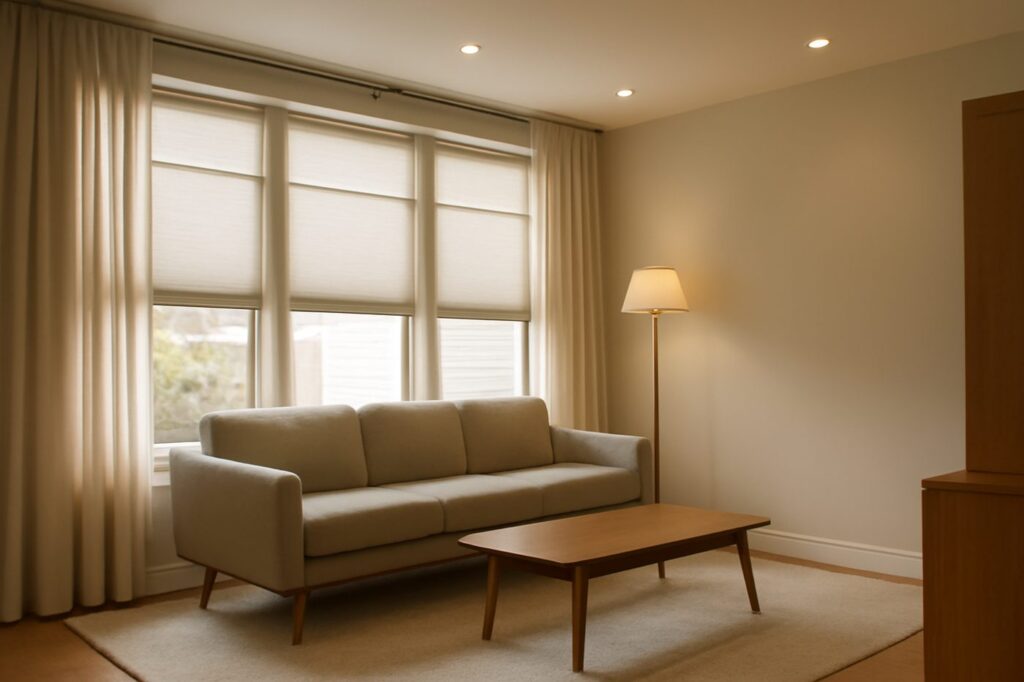
Comfort, daylight and material choices can do more than make rooms look good — they change how much energy your home needs to heat, cool and light. Below are practical, room-by-room styling strategies that improve thermal comfort and cut energy use while keeping a market-friendly aesthetic.
General principles to apply everywhere
- Layer for seasonality: combine insulating window treatments, rugs and throw layers for winter; swap to lighter layers and open shading in summer to maximize natural ventilation.
- Zone light and heat: create separate circuits and control zones so you only warm or light the areas you use.
- Choose finishes with low emissivity and high thermal mass where useful — muted matte surfaces and natural stone can store and slowly release heat.
- Think invisible tech: recessed sensors, discreet thermostats and integrated wiring preserve resale appeal while making systems efficient.
Living room: daylighting, lighting layout and furniture that manages heat
The living room is typically a multi-use space. Styling here should support daylight to reduce electric lighting, control solar gain and allow localized heating.
Lighting layout
- Plan three layers: ambient (overhead LEDs), task (floor/table LEDs with directional heads) and accent (wall washers or LED strips behind shelving).
- Use LED fixtures with CRI 90+ for market-friendly, natural color rendering and choose warm color temperature (2700–3000K) for comfort.
- Install dimmers compatible with LEDs and add occupancy sensors for seldom-used corners.
Furniture and daylighting
- Place seating to take advantage of winter sun without blocking it — keep a 3–4 foot clear path from glazing where practical.
- Use low-back furniture near windows to preserve daylight flow to interior spaces.
- Anchor the room with a rug sized so the front legs of major seating sit on it; this adds a thermal layer and reduces heat loss through floors.
Bedroom: thermal layering and lighting for sleep and efficiency
Bedrooms benefit most from controlled temperatures and lighting that supports circadian rhythms.
- Install blackout cellular shades or thermal curtains to reduce overnight heat loss — layer a light-filtering blind for daytime privacy while still admitting light.
- Choose a bedside lamp with dimming capability and warm LEDs; program lights to gently dim in the hour before bedtime.
- Place rugs so you step onto warm flooring; thicker natural fiber rugs (wool, blended jute) increase perceived warmth without changing the HVAC setpoint.
Safety note: If moving or modifying wiring for new lighting, hire a licensed electrician. For gas or combustion heaters, ensure proper ventilation and carbon monoxide protection.
Kitchen and dining: surfaces, ventilation and efficient task lighting
- Use durable low-emissivity countertops and backsplash materials (matte quartz, honed stone) that won’t radiate excessive heat or create glare.
- Fit under-cabinet LED strips for task lighting; they reduce the need for bright overhead fixtures and are energy-efficient.
- Balance ventilation and heat retention: use range hoods with variable speed and heat-recovery where possible, and close doors to adjacent conditioned rooms when cooking heat is undesired.
- Arrange dining furniture to allow heat from the kitchen to contribute in winter but be able to block direct summer solar gain with adjustable shading.
Bathroom and utility: moisture, finishes and localized heating
- Select moisture-resistant, low-emissivity finishes that don’t trap heat uncomfortably — porcelain or stone tile with a matte finish works for floors and walls.
- Consider a small, on-demand electric towel warmer or underfloor heating mat on a timer for short bursts of comfort rather than continuous heating.
- Use a humidity-sensing exhaust fan to limit unnecessary fan runtime while protecting finishes.
Safety note: Electrical devices near water must be installed to code by a licensed electrician. Underfloor heating and towel warmers should be GFCI-protected.
Materials and finishes: low‑emissivity choices that look good and insulate
Smart material selection can raise comfort and curb energy use without altering your aesthetic.
| Treatment | Typical added R-value | Typical cost per window |
|---|---|---|
| Cellular (honeycomb) shades | about R‑1 to R‑2 | about $50–$300 |
| Thermal curtains (lined) | about R‑0.5 to R‑1.5 | about $40–$200 |
| Reflective window film | modest; reduces solar heat gain | about $20–$150 |
| Upgrade to double/triple glazing | substantial (depends on glass/spec) | about $300–$1,500+ |
Choose low-emissivity paints and sealants for trim and baseboards to reduce radiative loss from walls. Natural materials such as wool, cork and certified wood offer good thermal and environmental profiles while keeping a market-friendly appearance.
Controls, zoning and simple smart strategies
Small control changes drive large comfort and energy wins.
Thermostats and zoning
- Use programmable or smart thermostats to set back temperatures at night and when rooms are unoccupied.
- Create zones by grouping rooms that are used together (living/dining vs. bedrooms). Zoning can be as simple as separate thermostats or as sophisticated as motorized dampers in ducted systems.
Switches, dimmers and schedules
- Install LED-compatible dimmers and smart switches in high-use areas; set schedules to reduce evening brightness and use timers for exterior lighting.
- Use occupancy sensors in hallways, closets and bathrooms to avoid leaving lights on unnecessarily.
- Bundle controls visually: choose matching faceplates and hide hubs in closets to maintain a clean, market-friendly look.
Practical step-by-step: add a simple zone
- Identify the rooms you want grouped (e.g., upstairs bedrooms).
- Install a programmable thermostat for that zone or add a duct damper kit if ducted.
- Set separate schedules: cooler at night, conditioned 1–2 hours before wake-up.
- Monitor and adjust for two weeks to find the best setback and recovery times.
Safety note: Work on gas furnaces, ductwork or forced-air systems may require licensed HVAC professionals to meet code and ensure safe operation.
Seasonal and market-friendly styling tips
- Keep finishes neutral and textures varied — buyers respond well to clean palettes with natural accents (wood, stone, woven textiles).
- Store heavy winter drapes and swap in lighter linen panels for summer to show reduced obstruction to daylight and airflow.
- Hide sensors and devices in trim or cabinetry for a seamless look while keeping functionality accessible.
Applying these room-by-room strategies — layered lighting, considered window treatments, smart material choices and simple zoning — boosts comfort and reduces energy use without sacrificing curb appeal. Small, thoughtful changes add up: you can create spaces that feel warmer in winter, cooler in summer and more inviting year-round.
Note: for electrical, gas or structural modifications, consult licensed professionals to ensure safety and code compliance.