
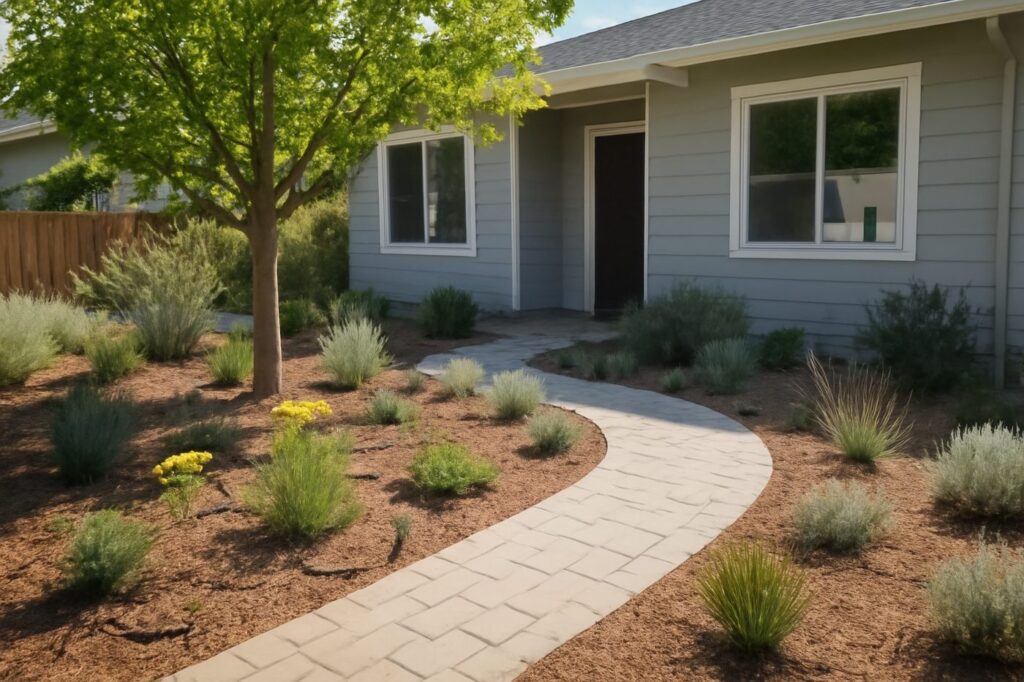
Creating a water-smart landscape lowers irrigation needs, cuts maintenance, and reduces home energy use by shading and cooling the building envelope. Below are practical, step-by-step strategies for US homeowners to design and maintain low-water, low-maintenance yards that deliver comfort and savings.
Start with a site assessment and goal-driven plan
Before buying plants or installing irrigation, map your property and set clear goals (shade, edible garden, low maintenance, stormwater control). Follow these steps:
- Sketch the lot: note house orientation, roof overhangs, windows, hardscapes, existing trees, slopes, and utility lines.
- Record microclimates: sunny/windy spots, morning vs. afternoon sun, frost pockets, and poorly draining areas.
- Define zones by water need: high (vegetable beds), moderate (ornamental shrubs), low (drought-tolerant groundcover).
- Set performance goals: percent reduction in outdoor water (e.g., 40% less irrigation), target shade coverage for summer, or capture X gallons of stormwater from a roof.
- Call utility locators before you dig—safety first.
Choose native and drought-tolerant plants
Select species adapted to your climate for lowest water and maintenance needs. Group plants with similar water requirements to make irrigation efficient.
| Plant Type | Example (by region) | Water Need | Maintenance |
|---|---|---|---|
| Groundcover | Low‑water grasses or native mats | Low | Occasional pruning, 1–2x/year |
| Shrubs | Drought‑tolerant natives/evergreens | Low–Moderate | Light pruning, occasional fertilize |
| Shade tree | Deciduous species suited to zone | Moderate (establishing), low once mature | Structural pruning early, monitor roots |
Tips for choosing plants:
- Use native lists from local extension services to find species adapted to local pests, soils, and rainfall.
- Prefer deep‑rooted plants—they access water better and need less frequent irrigation.
- Choose deciduous trees for west and south exposures so they provide summer shade and winter sun.
Amend soil and apply mulch for long-term water savings
Healthy soil holds water and reduces irrigation frequency. Follow this step-by-step approach:
- Test the soil for pH and organic matter—kits are inexpensive and local extension offices can help interpret results.
- In compacted or clay soils, incorporate coarse compost and, where recommended, a small amount of sand to improve structure. For sandy soils, add compost to boost water retention.
- Work amendments into the top 6–12 inches where most roots are active.
- Apply a 2–4 inch layer of organic mulch (wood chips, shredded bark) over planting areas, keeping mulch a few inches away from trunks and stems.
Mulch reduces evaporation and can typically cut irrigation needs by about 20%–40%.
Install drip irrigation and a smart controller
Drip irrigation targets the root zone and minimizes evaporation. Pairing drip systems with smart controllers further reduces wasted water.
- Design zones by plant water needs: a zone for trees, a zone for shrubs, and a zone for groundcovers or beds.
- Choose emitters sized to the root zone: typical emitter rates are about 0.5–2 gallons per hour (gph). Use lower gph for long, slow watering; use multiple emitters per tree (3–6) spaced at the root spread.
- Lay drip tubing along planting lines, and place emitters close to the root ball for new plants. Use root-soaker or subsurface drip for turf alternatives.
- Install a smart controller with rainfall shutoff and evapotranspiration (ET) scheduling so runtimes adjust automatically by weather. If wiring is involved, turn off power at the breaker and follow local electrical codes—consult an electrician when unsure.
- Set seasonal schedules: deep, infrequent watering in summer, reduced schedules in fall/winter; adjust as plants establish.
Drip systems with smart controls typically reduce landscape water use by about 20%–60% versus conventional sprinklers, depending on prior irrigation practices.
Place shade trees strategically to reduce cooling loads
Well-placed trees can lower summertime cooling needs by shading walls, windows, and the roof. Use this guidance:
- Place trees to the west and southwest of the house to block late-afternoon sun, and to the south for midday shade. East-side trees reduce morning heat gain.
- Deciduous trees are ideal over south windows: they drop leaves in winter to allow passive solar warming and provide shade in summer.
- Maintain a safe distance from foundations and septic/leach fields. As a rule of thumb, choose trees whose mature root spread typically won’t reach foundations—consider root barrier systems where necessary and call utility locators before planting near lines.
- Plan for clearance from power lines—select smaller canopy species under utilities or place them so branches won’t interfere with lines.
Proper shade tree placement can typically reduce cooling energy use by about 10%–30%, depending on home construction and tree maturity.
Use permeable hardscapes and stormwater features
Permeable surfaces and rain gardens reduce runoff, recharge groundwater, and lower strain on municipal storm systems.
- Options: permeable pavers, gravel with stabilizing grids, decomposed granite, and mulched infiltration beds.
- Design walkways and patios with a base layer that supports infiltration and prevents settling.
- Create shallow rain gardens under downspouts to capture roof runoff; size at roughly 10%–20% of the contributing roof area for modest rainfall events.
- Costs vary by material and region; expect permeable hardscape installations to typically range about $6–$20 per square foot installed, though DIY options for smaller areas can be less.
Note: avoid placing heavy impermeable loads over drain fields or where infiltration could undermine foundations. For structural concerns, consult a civil engineer or landscape professional.
Seasonal maintenance checklist and estimated savings
Maintain performance with simple seasonal tasks. The checklist below lists actions and typical savings ranges you can expect when done consistently.
- Spring: Check emitters and hoses, flush lines, refresh mulch, prune dead wood. Savings—reduces leaks and overwatering; typically saves 10%–20% water.
- Early summer: Adjust irrigation schedule for higher evapotranspiration, add temporary shade to vulnerable young plants. Savings—prevents stress, reduces supplemental watering.
- Mid–late summer: Inspect trees for structural issues, deep-water trees infrequently, monitor for pests. Savings—well‑placed shade maintains cooling benefits.
- Fall: Reduce runtimes, winterize controllers, remove invasive seedlings, replenish mulch. Savings—typically cuts late‑season irrigation substantially.
- Winter: Service irrigation system components and plan any larger projects. Savings—avoid frozen pipes and premature system failures.
Combined, these practices often translate into meaningful reductions in outdoor water use (commonly 30%–60% depending on baseline) and noticeable reductions in cooling energy during summer months.
Conclusion
Water-smart landscaping is a practical investment: it saves water, lowers maintenance, and reduces energy use when planned and executed with simple, durable techniques. Start small—create zones, amend soil, mulch, install targeted drip irrigation, and plant the right trees in the right places. With seasonal care, the yard will become more resilient and more comfortable while saving resources.
Safety notes: call utility locators before digging, shut off electrical power before working on controllers or wiring and consult a licensed electrician when needed, and consult structural professionals for major hardscape or grading changes.