
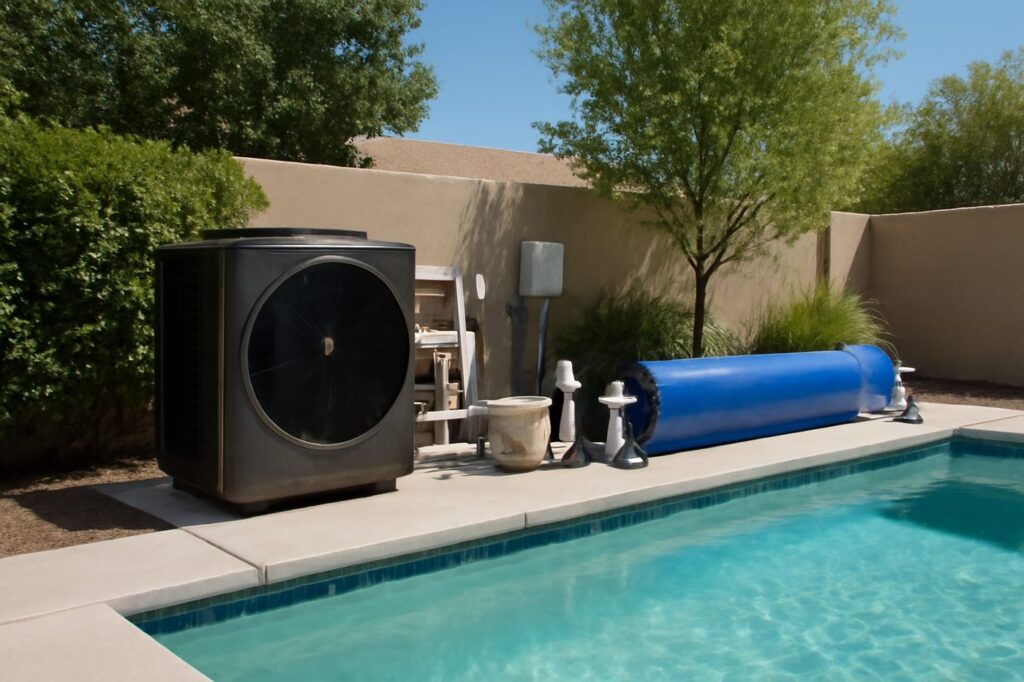
Running a comfortable pool doesn’t have to mean sky-high utility bills. Small, focused upgrades — the right heater, a good cover, a variable-speed pump, smarter filtration and routine chemical care — cut energy use and often pay for themselves in a few years. Below is a practical owner’s playbook for lowering operating costs without giving up swim season.
Heat: choosing and sizing heat pumps and solar options
Heating is usually the single largest controllable cost for a heated pool. Focus on matching capacity to your pool size and climate, and pick the right type of system for how you use the pool.
Heat pump sizing quick steps
- Calculate pool surface area (ft²): length × width for rectangular or approximate for irregular shapes.
- Estimate desired temperature rise: typical year-round pools are kept 78–84°F; the heat pump must overcome heat loss to maintain that setpoint.
- Choose capacity: as a rule of thumb in many U.S. climates, allow about 40–60 BTU/hr per ft² of surface area for year-round comfort; in colder climates increase capacity. Consult a dealer for exact load calculations if unsure.
- Factor manufacturer COP: higher coefficient of performance (COP) means more heat per kWh; choose the highest practical COP for local winter temps.
Heat pumps are electric and efficient in moderate climates; solar thermal (collector arrays) works very well in sunny regions. If gas is in use, compare operating costs: electric heat pumps often cost less to run per unit of heat in many areas, but local rates and fuel prices matter.
Safety note: have a licensed electrician install and wire the heat pump. If replacing a gas heater, use a licensed plumber/technician.
Solar and thermal covers: the most cost-effective heat conservation
Evaporation is the principal source of pool heat loss. Covers drastically cut evaporation and heat loss while also reducing chemical loss.
- Insulated/thermal covers: choose a cover sized to your pool; thicker, insulating material reduces radiant and convective losses.
- Solar bubble covers: inexpensive and light; they warm daytime water and reduce evaporation, but have lower insulating value than insulated covers.
- Automatic covers: expensive but fast and convenient; they can act as a safety feature if rated for that purpose.
Use a cover whenever the pool is not in use. Rolling reels make daily use practical. Safety note: do not rely on common solar covers for safety — use a certified safety cover if protection against accidental entry is required.
Pumps, controls and timers: convert to variable speed and automate
Most pool pumps sold before the last decade are single-speed and waste energy by running at high power unnecessarily. Variable-speed pumps (VSPs) can reduce consumption dramatically when paired with smart controls.
How to size and program a VSP
- Calculate pool volume (gallons) and desired turnover period (most owners aim for an 8-hour turnover; some systems require 6–12 hours).
- Compute required flow: gpm = gallons / (turnover_hours × 60).
- Account for system head (pipes, filters, heaters): use pump manufacturer charts or have a pro measure head to pick a speed/curve that delivers required flow at minimal power.
- Program daily schedule: run longer at lower speeds (continuous low-speed circulation) rather than short high-speed bursts. Schedule higher speeds only for tasks like vacuuming or peak chemical feeder dosing.
Smart controls or timers let you shift circulation to off-peak electricity hours when available and automate spa-to-pool mode or solar integration. Safety note: electrical components must be installed to code by a qualified electrician.
Filtration and chemical maintenance to shorten pump runtimes
Cleaner water reduces the need for long filtration runtimes. Optimizing filtration and treatment keeps the pump from having to run as long while maintaining water quality.
- Choose efficient filters: modern cartridge or high-quality DE filters often deliver better clarity with less resistance than old sand filters, reducing pump energy for the same flow.
- Keep filters clean: backwash or clean cartridges on a regular schedule. A dirty filter increases head and pump energy.
- Maintain balanced water chemistry: correct pH, alkalinity and sanitizer levels prevent algae blooms that force longer circulation and shock treatments.
- Use chemical automation where feasible: feeders and automation reduce overfeeding and keep levels stable, letting you run the pump less.
- Shift skimmers and returns: avoid throttling suction lines excessively — balance valves but avoid creating unnecessary head.
Winterizing and seasonal tips
Proper off-season care reduces damage and energy use. Steps vary by climate.
- Warm climate: if leaving heated, reduce setpoint to a maintenance temperature and keep a cover on. Consider a timer to run the pump during daylight when solar boost is available.
- Cold/freezing climates: blow out lines or use low-pressure air to prevent freeze damage, drain pumps and heaters per manufacturer instructions, and remove or secure equipment vulnerable to ice.
- Gas heaters: shut off gas supply and follow manufacturer winterization steps; gas-connected work requires a licensed technician.
Safety note: never run equipment without water; centrifugal pumps can overheat if run dry. When winterizing, follow product manuals or hire a pro.
Quick ROI checks to prioritize upgrades
Use simple payback to prioritize work: estimate installed cost and annual savings, then divide cost by savings to get years to payback. Savings depend on local utility rates, pool size and usage patterns.
| Upgrade | Typical installed cost | Typical annual energy savings | Typical simple payback |
|---|---|---|---|
| Variable-speed pump | about $700–$2,000 | about $200–$1,000/year | about 1–10 years |
| Pool heat pump | about $3,000–$7,000 | about $500–$2,500/year | about 2–10 years |
| Solar thermal (collectors) | about $3,000–$8,000 | about $300–$1,500/year | about 3–15 years |
| Solar/insulated cover | about $50–$800 | about $200–$1,200/year | under 1–4 years |
How to prioritize: start with low-cost, high-impact items (covers, tune-ups, programmable timers), then convert the pump to variable speed, and finally consider heating upgrades based on how much warm-water season you want and local energy prices. In sunny, warm regions solar or solar-assisted systems often move up the priority list; in cooler climates a high-efficiency heat pump with good insulation and a cover is typically better.
Conclusion
Cutting pool operating costs is a mix of smart behavior and targeted investment. Start with consistent habits — cover up, clean filters, balance chemicals — then move to efficiency upgrades (variable-speed pump, insulated cover) and finally heating choices tuned to your climate. Use simple payback math to decide what to do first, and always follow safety and code requirements when working with electricity and gas.