Basements and concrete foundations are the first line of defense against water, soil movement and humidity. Left unchecked, water intrusion leads to mold, structural damage and expensive repairs. We’ll walk through the practical, climate-aware steps for keeping below-grade spaces dry: improving exterior drainage, choosing the right membranes, deploying interior systems, and using low-cost fixes that often stop problems before they start.
Understand the water sources and climate considerations
Effective waterproofing starts with identifying how water reaches the foundation. There are four common sources:
- Surface runoff from grading, roof runoff or neighboring properties.
- Groundwater acting on the foundation (higher in high water-table areas).
- Hydrostatic pressure pushing water through cracks and joints.
- Condensation and humidity in humid climates or unheated basements.
Climate matters. In cold climates, freeze–thaw cycles can widen cracks and damage exterior finishes; membranes need to resist thermal movement. In coastal or high water-table areas, continuous exterior drainage and robust membranes are essential. In humid southern climates, interior vapor control and ventilation reduce condensation.
Exterior drainage: grade, gutters and perimeter drains
Exterior drainage fixes often deliver the best long-term bang for the buck because they keep water away from the foundation before it ever gets to the wall.
Practical steps to improve exterior drainage
- Check grading: Ensure soil slopes away from the foundation at least 6 inches over the first 10 feet where possible. Add soil, compact lightly, and place topsoil near plantings to maintain slope.
- Maintain gutters and downspouts: Clean gutters twice a year. Extend downspouts so water discharges at least 4–6 feet from the foundation using rigid extensions or buried drains.
- Install surface drains where low spots concentrate runoff: Use catch basins tied to a discharge point or storm sewer.
- Consider exterior perimeter drains (drain tile): For homes with recurring seepage or high groundwater, install a perforated pipe wrapped in filter fabric at the footing level to collect and route water away.
Safety note: Before any excavation, call your local utility locating service to mark buried gas, electric and communication lines.
Exterior membranes and insulation options
When exterior drainage is insufficient or water is pressuring the wall, membranes provide a continuous barrier. Choose a system based on climate and soil conditions.
Common exterior membrane types
- Sheet membranes (rubberized/asphaltic or HDPE): Durable and good under backfill; sheet types perform well against hydrostatic pressure but require careful detailing at penetrations.
- Liquid-applied membranes: Spray or brush-applied elastomeric coatings that form a seamless membrane — useful for complex shapes and repairs.
- Bentonite panels: Swell when wet and seal joints; effective in some high-groundwater cases but may require protection board over them.
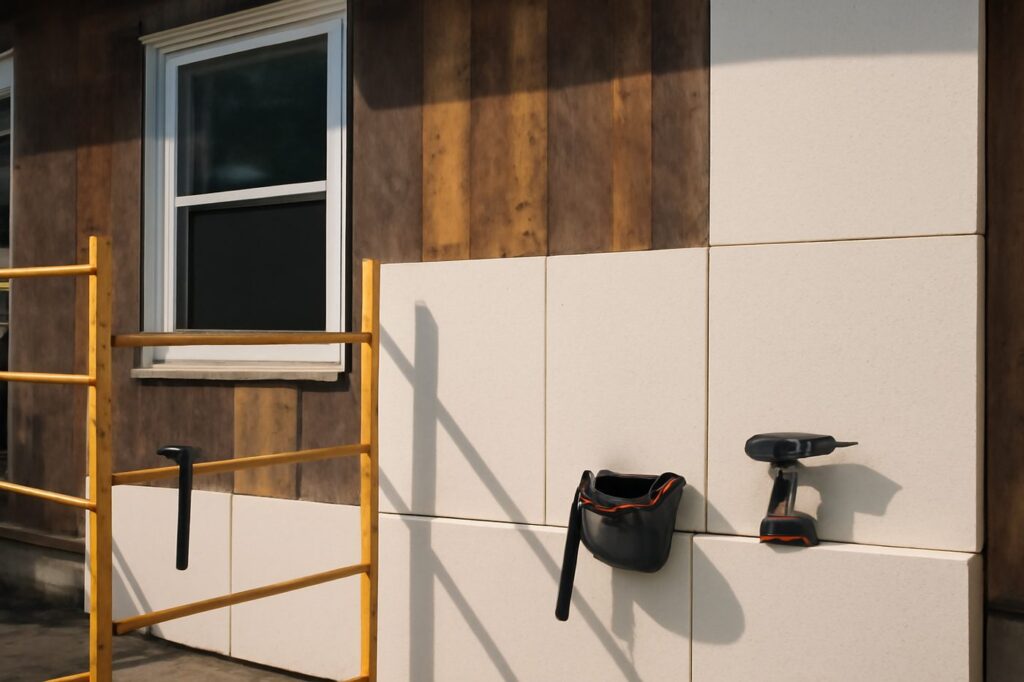
For insulated foundations, use rigid foam insulation approved for below-grade use, installed over the membrane or integrated into the system depending on the product. Ensure drainage is not obstructed by insulation placement.
Interior systems: perimeter drains, sump pumps and vapor control
Interior systems address water that reaches the footing or that migrates through the slab. They are often less disruptive and more affordable than full exterior excavation.
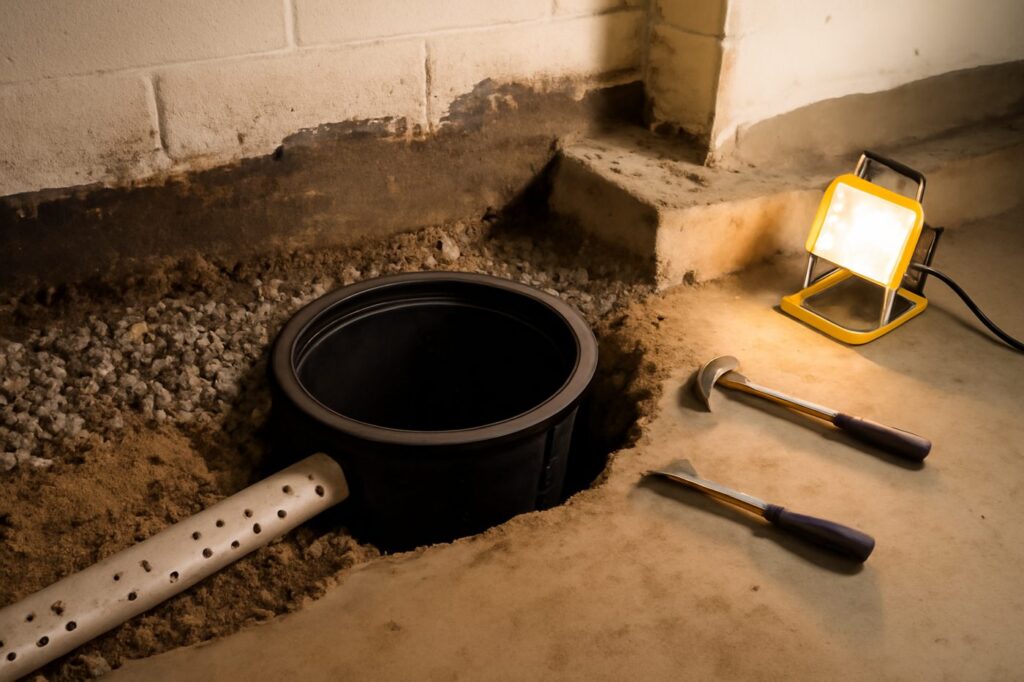
Interior perimeter drain and sump pump — step-by-step overview
- Locate the low point: Identify where water collects along the perimeter.
- Cut and remove a narrow groove along the slab edge to the footing (typically 4–6 inches wide).
- Install perforated drain pipe in gravel or filter material, sloped toward the sump basin.
- Connect to a sump pump in a sealed basin and route discharge away from the foundation (or to an approved daylight/storm system).
- Patch the concrete slab over the trench and test the sump pump.
Typical costs for interior systems vary: installing an interior perimeter drain with a sump pump is typically about $2,000–$6,000 depending on basement size and accessibility. Simpler fixes like slab crack sealing or small epoxy injections are cheaper (typically a few hundred dollars).
Vapor control: Install a continuous vapor barrier (6-mil or heavier polyethylene) on walls and floors where condensation is a problem. In finished basements, use wall insulation systems designed to manage moisture.
Crack repair and finishes: direct fixes that prevent leaks
Not every leak requires excavation. Many small to moderate problems respond well to targeted repairs.
- Pressure-injection for active leaks: Urethane injection expands to block active water flow in cracks. Epoxy injection is an option for structural crack repair when dry conditions allow.
- Surface sealants: Hydraulic cement or elastomeric coatings can stop minor seepage. These are cost-effective initial steps but are not substitutes for poor exterior drainage.
- Window wells and bulkheads: Ensure window wells have drains tied to the perimeter drain or gravel-filled pits. Install covers to reduce runoff entry.
Cost comparison at a glance
| Method | Typical cost | Best for |
|---|---|---|
| Grading and downspout extensions | Typically low — $100–$1,000 | Surface runoff control |
| Interior perimeter drain + sump | Typically $2,000–$6,000 | Recurring seepage, high water table |
| Exterior membrane + drain tile | Typically $50–$150 per linear foot | Severe water pressure, long-term solution |
| Crack injection or local repairs | Typically $300–$1,500 | Small to moderate active leaks |
Maintenance and monitoring
Even well-designed systems require periodic checks:
- Test sump pumps twice a year and ensure the float is free. Consider a battery backup in power-outage-prone areas.
- Clear gutters, inspect downspout extensions and verify grading after heavy storms.
- Monitor interior humidity; use a dehumidifier if relative humidity stays above 50% to prevent condensation and mold.
- Inspect finished basements for new cracks, efflorescence (white mineral deposits) or damp spots and address them early.
Safety note: For any work involving electrical connections, sump pump installation, or gas lines near foundation work, disconnect power and consult a licensed electrician or plumber as required by local code.
Prioritize fixes: where to start
When budgets are limited, follow this order to maximize effect:
- Resolve surface runoff: grading and downspouts — low cost and high impact.
- Stop active leaks with crack injections or localized sealants.
- If problems persist or water pressure exists, add interior drains and a sump.
- Reserve full exterior excavation and membrane installation for severe or recurring hydrostatic problems.
Structural warning: If water is accompanied by significant wall bowing, cracks wider than about 1/4 inch, or foundation settlement, stop and consult a structural engineer before proceeding.
Keeping basements dry combines good site management, appropriate materials for your climate, and timely maintenance. Many wet-basement problems are solved by addressing surface drainage first, then adding interior systems or exterior membranes as needed. We recommend a staged approach: start with the least invasive, most cost-effective fixes and escalate to more extensive measures only when necessary.